


Hello, I’m Katie. I want you to take a moment. Just a soft, quiet breath. In… and out. If you’re here, chances are your workday feels like carrying a heavy backpack that never gets lighter. The constant pressure, the endless to-do lists, the feeling of being pulled in a dozen directions at once, it’s exhausting, isn’t it?
Please know you are not alone in this feeling. The modern workplace can be a demanding space, but your wellbeing deserves to be nurtured, always. This isn’t about pushing harder or finding a ‘quick fix.’ It’s about gently weaving moments of peace and resilience into your daily rhythm. Together, we’ll explore some kind, practical, and truly effective workplace stress management strategies. These aren’t just theories; they are invitations to reconnect with yourself, restore your energy, and find a calmer, more balanced way to navigate your professional life.
This guide is designed to offer actionable support, helping you build a personal toolkit for resilience. For a broader understanding of how to proactively tackle stress and foster a healthier environment, you can explore these proven tips to reduce workplace stress. Let’s begin this journey with compassion.
1. Mindfulness-Based Stress Reduction (MBSR)
Imagine for a moment that your mind is a busy train station, with thoughts rushing in and out like commuters. Mindfulness is the practice of gently stepping onto the platform and simply observing the trains come and go, without feeling the need to jump on every single one. This is the heart of Mindfulness-Based Stress Reduction (MBSR), a beautiful, structured programme that combines meditation, body awareness, and gentle yoga to help you find your calm centre.
A Gentle Education on MBSR
MBSR gently teaches you to notice your thoughts and feelings without judgement. Through simple practices like mindful breathing and body scans, you learn to recognise stress signals early, before they feel overwhelming. It’s a way to offer yourself kindness and attention, even on the busiest of days. This makes it one of the most nurturing workplace stress management strategies you can explore for anxiety support and true stress relief.
Practical Support for Your Day
- The Three-Breath Pause: Before your next meeting, close your eyes and take three slow, intentional breaths. Notice the air filling your lungs and then gently leaving. This simple act can create a pocket of peace.
- Mindful Moment: As you drink your tea or coffee, bring your full attention to it. Notice the warmth of the mug, the aroma, the taste. For just one minute, let that be your entire world.
- Desk-Side Body Scan: Take 5–10 minutes to sit quietly and bring gentle awareness to each part of your body, from your toes to your head, noticing any sensations without needing to change them.
An Invitation to Reflect
Just for a moment, pause and notice how you are feeling right now. Is your breath shallow or deep? Are your shoulders tense? There is no right or wrong answer, just a gentle observation. MBSR is a wonderful way to find stillness and I invite you to learn more about Mindfulness-Based Stress Reduction (MBSR).
2. Time Blocking and Priority Management
Does your to-do list sometimes feel like a relentless wave, pulling you under before you can catch your breath? Time blocking is a gentle yet powerful way to create a sturdy lifeboat. It’s a simple technique where you schedule every part of your day, assigning a specific purpose to each block of time. This helps you move from feeling reactive and overwhelmed to feeling intentional and in control.

A Gentle Education on Time Blocking
Instead of letting an endless list dictate your day, time blocking invites you to become the gentle architect of your time. By creating a calm, intentional plan, you protect your focus and energy for what truly matters. It’s about making conscious choices that align with your priorities, transforming your schedule from a source of stress into a supportive framework for your day.
Practical Support for Your Day
- Theme Your Days: Dedicate certain days to specific types of work. For example, Mondays for planning and deep work, Fridays for wrapping up projects and admin tasks. This reduces mental clutter.
- Schedule ‘Breathing Room’: Intentionally block out 15-minute buffers between meetings. Use this time to stretch, grab a glass of water, or simply look out the window. This isn’t empty time; it’s recovery time.
- Create a ‘Focus Block’: Schedule a 90-minute block of uninterrupted time for your most important task. Turn off notifications, close extra tabs, and give yourself permission to focus deeply.
An Invitation to Reflect
Take a look at your calendar for tomorrow. Where could you carve out just one small block of time that is dedicated solely to you or a priority task? This method deserves its place in your toolkit because it transforms a chaotic day into a manageable, intentional workflow. I invite you to learn more about creating a Balanced Work-Life Schedule.
3. Employee Assistance Programs (EAPs)
We all have times when life feels heavy, and carrying that weight alone can be incredibly difficult. An Employee Assistance Programme (EAP) is like a quiet, supportive friend offered by your employer, always available to listen and help you find a path forward. It’s a confidential benefit that provides free, short-term support for personal and work-related challenges, ensuring no one has to face their struggles in isolation.
A Gentle Education on EAPs
Think of an EAP as a compassionate safety net. It offers a private way to access qualified professionals, like counsellors or advisors, for guidance on anything affecting your wellbeing—from anxiety support to financial worries. The most important thing to know is that your conversations are confidential, allowing you to seek help with a sense of safety and trust.
Practical Support for Your Day
- Know Your Access Point: Find out how to contact your company’s EAP. Save the number in your phone or bookmark the webpage so it’s easy to find when you need it.
- Reach Out Early: You don’t need to be in a crisis to use an EAP. Reaching out when you first notice stress building can provide you with tools to navigate challenges more peacefully.
- Encourage Others Gently: If you notice a colleague is struggling, you could gently remind them that the EAP is a resource available to everyone, without needing to know their personal details.
An Invitation to Reflect
Remind yourself that it is a sign of strength, not weakness, to ask for help. Including an EAP in your workplace stress management strategies shows a genuine commitment to your team’s holistic wellbeing. It’s a powerful way to build a resilient and supportive culture.
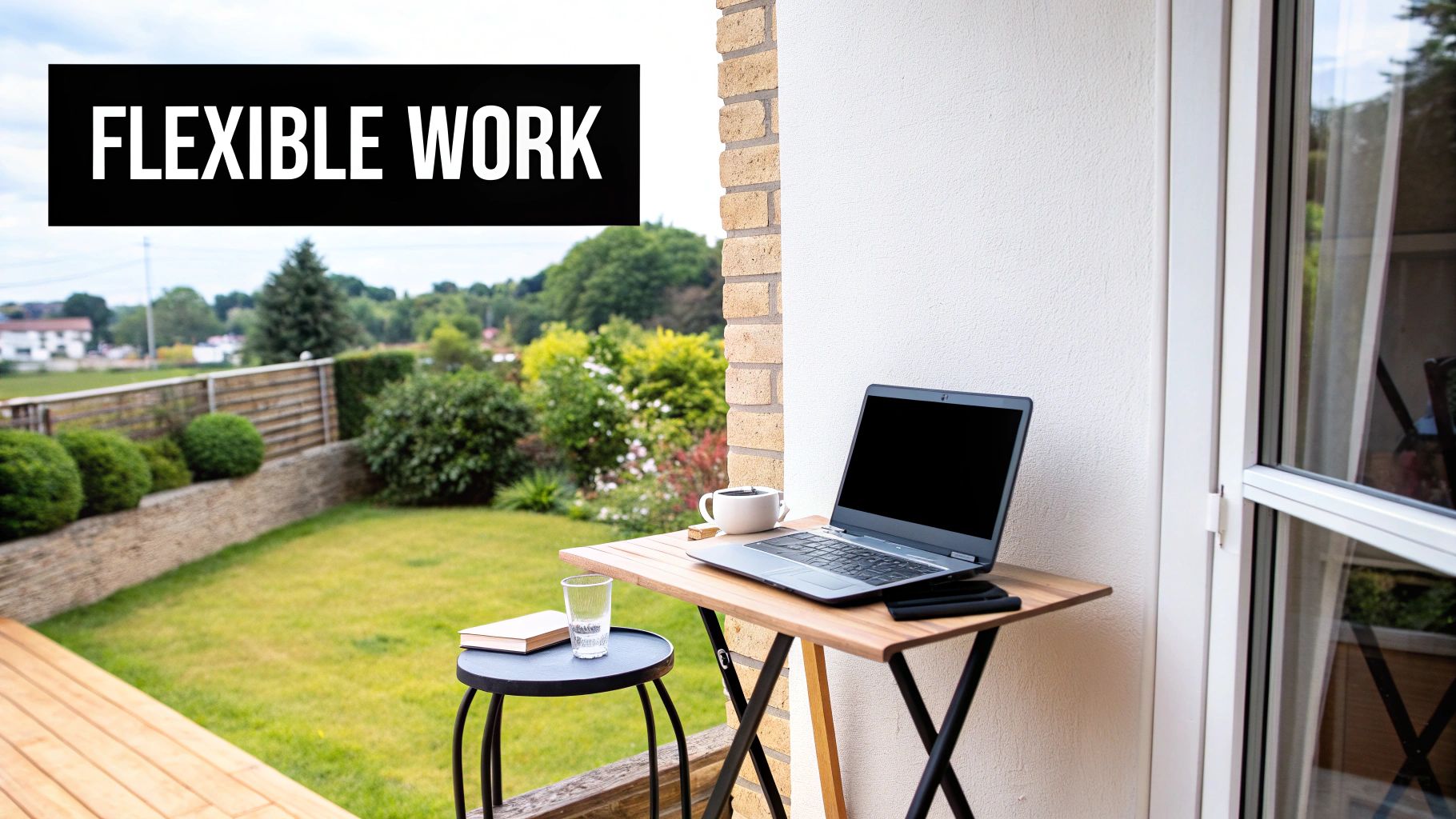
4. Flexible Work Arrangements
Life doesn’t always fit neatly into a 9-to-5 box. Flexible work arrangements are a compassionate response to this reality, empowering you to adjust your work schedule or location to better fit your personal needs. This approach helps reduce the friction between professional responsibilities and personal life, creating space for a more integrated and peaceful rhythm.

A Gentle Education on Flexible Work
This strategy is built on trust and focuses on results rather than the hours spent at a desk. Whether it’s working from home to avoid a stressful commute, adjusting your hours for the school run, or compressing your week into four days, flexibility gives you autonomy over how you manage your energy and your time. It’s a powerful way to reclaim a sense of balance.
Practical Support for Your Day
- Create Gentle Boundaries: If you work from home, define your start and end times clearly. A simple ritual, like closing your laptop and going for a short walk, can signal the end of the workday.
- Communicate with Intention: Keep your team informed about your working hours. This fosters trust and ensures everyone feels connected and respected, no matter where they are.
- Design Your Ideal Environment: If you have flexibility, create a workspace that feels calming and supportive for you. It might be a quiet corner with natural light or a space filled with plants.
An Invitation to Reflect
How would a little more flexibility change your day? Flexible work is one of the most effective workplace stress management strategies because it honours you as a whole person. I invite you to explore more about improving your work-life balance.
5. Physical Wellness Programs
Our minds and bodies are deeply connected, like the roots and branches of a tree. When our body feels strong and nourished, our mind is better able to weather life’s storms. Physical wellness programmes in the workplace are initiatives that honour this connection, promoting health through gentle movement, nutrition, and ergonomic support to build a foundation of physical resilience against stress.
A Gentle Education on Physical Wellness
These initiatives are about creating opportunities to care for your body during the workday. They can be as simple as offering healthy snacks, organising walking meetings, or providing support for ergonomic desk setups. The goal is to build physical resilience, which directly helps soothe the nervous system and combat the physiological effects of stress, making this a cornerstone of holistic therapies for wellbeing.
Practical Support for Your Day
- Incorporate ‘Movement Snacks’: Throughout the day, take 2-3 minute breaks to stretch, walk around, or do some simple yoga poses at your desk. These small movements prevent physical strain from building up.
- Hydrate Mindfully: Keep a bottle of water on your desk and take mindful sips throughout the day. Notice how it feels to nourish your body.
- Take a ‘Walking Meditation’: If you have a break, go for a short walk and focus on the sensation of your feet on the ground. This combines gentle exercise with mindfulness for powerful stress relief.
An Invitation to Reflect
Take a moment to check in with your body. Where are you holding tension? Could you gently roll your shoulders or stretch your neck? When we feel physically cared for, we are far better equipped to handle emotional challenges. Learn more about how to release physical strain and reduce muscle tension.
6. Social Support Systems and Team Building
Feeling seen, heard, and connected to others is a fundamental human need. At work, a strong social support system can feel like a warm, protective blanket during stressful times. This strategy is about intentionally nurturing strong bonds and creating a culture of psychological safety, ensuring that no one feels they are navigating their challenges alone.
A Gentle Education on Social Support
This is about more than just social events; it’s about creating an environment where colleagues genuinely care for one another. When we foster open communication and authentic relationships, the workplace can transform from a source of strain into a source of strength and belonging. It builds a resilient community where asking for help is encouraged and celebrated.
Practical Support for Your Day
- Practice Active Listening: In your next conversation with a colleague, give them your full, undivided attention. Listen to understand, not just to respond. This simple act builds deep connection.
- Offer Specific Praise: Acknowledge a coworker’s contribution with a specific and heartfelt compliment. For example, “I really appreciated how you handled that difficult client call with such grace.”
- Schedule ‘Connection Time’: Suggest a brief, informal coffee chat (virtual or in-person) with a team member, with no agenda other than to connect as human beings.
An Invitation to Reflect
Think of one person at work you could offer a small gesture of support to this week. Social support systems are key in your workplace stress management strategies because they remind us that we are all in this together, creating a healthier and happier environment for everyone.
7. Cognitive Behavioural Techniques (CBT)
Our thoughts can sometimes feel like a stormy sea, tossing us around with waves of worry and self-doubt. Cognitive Behavioural Techniques (CBT) are like learning to be a calm, skilled sailor who can navigate those waters. These powerful tools help you gently identify and reshape the negative thought patterns that contribute to stress, empowering you to find a calmer inner state.
A Gentle Education on CBT
CBT helps you notice the unhelpful stories your mind might be telling you—like assuming the worst about a project or being overly critical of yourself. It then equips you with practical skills to question these thoughts and reframe them in a more balanced and compassionate way. It’s about learning to be your own supportive coach, gently guiding your thoughts toward a more peaceful place.
Practical Support for Your Day
- Keep a ‘Thought Journal’: When you feel stressed, take a moment to write down the thought that is causing the anxiety. Simply seeing it on paper can lessen its power.
- Ask a Gentle Question: When a worry arises, ask yourself gently, “What is a kinder, more realistic way to look at this situation?”
- Use the ‘STOP’ Technique: When you feel overwhelmed, Stop what you’re doing. Take a conscious breath. Observe what is happening in your mind and body without judgement. Proceed with intention.
An Invitation to Reflect
Notice a recurring thought that causes you stress. Can you offer it a gentle challenge? CBT provides a practical framework for regaining a sense of calm agency over your mindset. I warmly invite you to explore how these simple techniques can bring clarity to your work life.
8. Workload Management and Delegation
Feeling constantly overwhelmed by a mountain of tasks is one of the quickest paths to burnout. Workload management is the gentle art of organising that mountain into a manageable path. It’s about working smarter, not harder, by ensuring your energy is focused where it matters most and learning to share the load through thoughtful delegation.
A Gentle Education on Workload Management
This practice isn’t about rigid control; it’s about creating clarity and breathing room. It involves taking a compassionate look at your commitments, prioritising what is truly important, and trusting others to contribute. It’s a key skill for sustainable productivity and one of the most effective workplace stress management strategies for preventing overwhelm.
Practical Support for Your Day
- Identify Your ‘One Thing’: At the start of each day, ask yourself, “What is the one most important thing I can do today that will make me feel accomplished?” and prioritise that.
- Practice Saying a ‘Gentle No’: It’s okay to politely decline requests that aren’t a priority. You can say something like, “Thank you for thinking of me, but my plate is full right now and I wouldn’t be able to give that the attention it deserves.”
- Delegate with Trust: When you delegate a task, focus on the desired outcome and give the person the autonomy to achieve it in their own way. This builds confidence and capability.
An Invitation to Reflect
Look at your to-do list. Is there one small task you could delegate, or perhaps even let go of entirely? Proper workload management directly tackles the feeling of being out of control, restoring a sense of calm and purpose to your workday.
9. Stress-Reduction Breaks and Recovery Periods
In our culture of constant productivity, it’s easy to believe that we should always be ‘on’. But just like a garden needs periods of rest to flourish, so do we. Intentional breaks are not a sign of weakness; they are a vital part of a sustainable and healthy work rhythm. They allow your mind and body to rest, restore, and prevent stress from quietly building up.
A Gentle Education on Recovery
This strategy is about weaving deliberate pauses into your day. These can be short ‘micro-breaks’ away from your screen, a peaceful lunch break without distractions, or ensuring you fully disconnect after work hours. The aim is to honour your natural energy cycles, stopping burnout before it takes hold and nurturing your overall wellbeing.
Practical Support for Your Day
- Try the Pomodoro Technique: Work with focused attention for 25 minutes, then give yourself a full 5-minute break to step away from your desk. This simple rhythm can feel incredibly restorative.
- Create a ‘Reset Ritual’: Design a simple 2-minute routine for your breaks. It could be listening to a favourite calming song, doing a few gentle stretches, or simply looking out the window and noticing the sky.
- Schedule Your Breaks: Just as you schedule meetings, put your breaks in your calendar. This gives them the same importance and protects that time for your recovery.
An Invitation to Reflect
How could you build one intentional pause into your afternoon today? Understanding the psychology of reset rituals can help you create routines that truly rejuvenate you. I invite you to see these pauses not as interruptions, but as compassionate investments in your own clarity and calm.
Workplace Stress Management Strategies Comparison
| Method | Implementation Complexity | Resource Requirements | Expected Outcomes | Ideal Use Cases | Key Advantages |
|---|---|---|---|---|---|
| Mindfulness-Based Stress Reduction (MBSR) | Moderate (8-week structured program) | Minimal (time for daily practice) | Reduced stress, better emotional regulation | Individuals seeking long-term stress relief | Evidence-based, portable, enhances focus |
| Time Blocking and Priority Management | Moderate (initial setup and adjustments) | Digital/calendar tools | Improved productivity, reduced decision fatigue | Task-heavy roles needing structure | Clear boundaries, prevents burnout |
| Employee Assistance Programs (EAPs) | Low to moderate (program setup and promotion) | Professional counseling services | Immediate support, improved mental well-being | Organizations offering confidential support | Confidential, broad service range, cost-effective |
| Flexible Work Arrangements | Moderate to high (policy creation, tech) | Collaboration tools, tech investment | Reduced commute stress, better work-life balance | Roles amenable to remote/hybrid work | Job satisfaction, retention, productivity boost |
| Physical Wellness Programs | High (facilities and ongoing management) | Fitness equipment, health screenings | Improved physical health, reduced healthcare costs | Workplaces promoting overall wellness | Natural stress relief, team cohesion |
| Social Support Systems and Team Building | Moderate to high (ongoing activities) | Time and engagement efforts | Enhanced psychological safety, stronger relationships | Teams needing improved communication | Reduces isolation, builds resilience |
| Cognitive Behavioral Techniques (CBT) | Moderate (training or self-study) | Educational materials, possible counseling | Reduced negative thinking, improved coping skills | Individuals with workplace anxiety or stress | Practical, addresses root causes |
| Workload Management and Delegation | Moderate (leadership skills & systems) | Tools for planning and delegation | Reduced burnout, better team productivity | Teams with heavy or uneven workloads | Builds team capability, prevents overwhelm |
| Stress-Reduction Breaks and Recovery Periods | Low to moderate (scheduling & culture change) | Quiet spaces, policy adjustments | Increased focus, reduced physical and mental strain | Fast-paced, high-stress environments | Prevents stress buildup, boosts creativity |
Your Invitation to Deeper Calm and Wellness
Thank you for spending this time with me. As we’ve journeyed through these different workplace stress management strategies together, I hope you’ve felt a glimmer of hope, a gentle realisation that a calmer, more centred workday is truly within your reach. It can often feel like managing stress is just another demanding task to add to an already overflowing to-do list, another thing to get ‘right’. But I invite you to see it differently.
This isn’t about perfection; it’s about compassion. It’s about weaving small, kind acts of self-care into the fabric of your day. It might be taking a single, mindful breath before joining a video call, as we explored with Mindfulness-Based Stress Reduction. It could be the clarity that comes from intentional time blocking, or the simple act of stretching your body for five minutes away from your desk. These aren’t grand gestures; they are quiet whispers of support you offer yourself.
Think of these strategies not as a rigid rulebook, but as a comforting menu of options. You don’t have to implement all of them at once. The most powerful approach is to choose what feels most supportive for you right now.
A key takeaway: True stress management is a practice of self-attunement. It’s about listening to your body and mind and responding with gentle, consistent care rather than force.
Taking Your First Gentle Step
So, I invite you to pause for just a moment. Take a soft breath in, and a slow breath out. Notice how you feel in your body right now. Is there one small idea from our list that resonates with your heart?
- Perhaps it’s the idea of setting a firm boundary around your lunch break.
- Maybe it’s the thought of using a Cognitive Behavioural Technique to reframe a recurring worry.
- Or it could simply be giving yourself permission to take a short, technology-free walk.
Whatever it is, could you gently try it this week? Approaching these workplace stress management strategies with curiosity instead of pressure is the kindest way to begin. Your wellbeing is precious, and nurturing it is one of the most valuable investments you can ever make, allowing you to show up more fully not just at work, but in every part of your life.
CONTACT US
Contact Natural Light Wellness Spa to book your holistic treatments today. Our friendly Guildford team is ready to help you find your perfect session. Contact us now to schedule your relaxation and prioritise your wellness.

