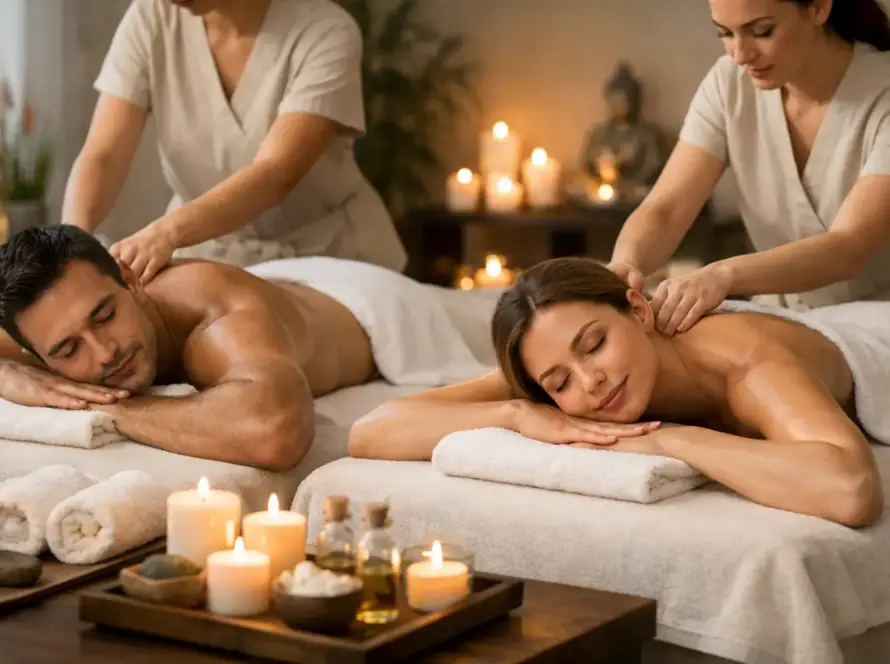
The moment a carefully chosen aroma reaches you, the body often responds before the mind has found the words for it. Your shoulders soften, your breathing becomes slower, and the pace of the day begins to loosen its hold. This guide to aromatherapy massage is for anyone seeking more than a pleasant scent – it is for those who want a massage experience shaped around rest, comfort, and a genuine return to center.
Aromatherapy massage combines therapeutic touch with diluted essential oils selected for their aroma and, where appropriate, their traditional wellness qualities. It can be a beautiful choice when stress has become physical, when sleep feels elusive, or when you simply need protected time to feel cared for. The experience is never one-size-fits-all. The best treatment considers your preferences, sensitivities, goals, and how you wish to feel when you leave.
What Happens During Aromatherapy Massage?
At its heart, aromatherapy massage is a personalized relaxation treatment. Your therapist begins with a consultation, asking about areas of tension, your current wellbeing, fragrance preferences, allergies, medical considerations, and the kind of pressure you enjoy. This conversation matters. An aroma that feels grounding and comforting to one person may feel too intense or unfamiliar to another.
Essential oils are blended into a neutral carrier oil before being applied to the skin. They are not used neat or in concentrated form during a professional massage. As the therapist works through the body with flowing, unhurried strokes, you experience the oils through both skin contact and inhalation.
Most aromatherapy massages use lighter to medium pressure and a slower rhythm than a deep tissue or sports massage. The purpose is not usually to work forcefully into knots. Instead, the treatment invites the nervous system to settle while easing everyday muscular tightness. If you carry a great deal of tension in your neck, shoulders, or lower back, your therapist can still give these areas thoughtful attention without losing the restorative character of the session.
The setting also shapes the treatment. Warm linens, low lighting, quiet, and time to arrive without rushing all help turn a massage into a fuller wellness ritual. At Natural Light, this sense of being hosted with care is part of the experience: the treatment is space to pause, not another item to squeeze into a crowded schedule.
Choosing Oils That Match Your Intention
There is no single “best” essential oil. The right blend depends on what you need that day and, just as importantly, what feels pleasant to you. A skilled therapist may offer guidance, but you should always feel able to say no to an aroma or request something softer.
Lavender is often chosen for a calming, familiar floral scent and is frequently associated with evening relaxation. Sweet orange, bergamot, and other citrus oils can feel bright and uplifting, making them appealing when you feel mentally drained or emotionally flat. Geranium and rose-inspired blends are often selected for a softer, nurturing sensory experience, while frankincense, cedarwood, and sandalwood are favored by many people who want an earthier, more meditative atmosphere.
Peppermint, eucalyptus, rosemary, and ginger can feel fresh, warming, or clarifying, but they are not ideal for everyone. Stronger aromas may be overwhelming if you are prone to headaches, nausea, or scent sensitivity. Some citrus oils also require particular care around sun exposure depending on the formulation. This is why a professional consultation is more valuable than choosing an oil based on a label alone.
Rather than arriving with a rigid idea of what you “should” choose, try naming your intention. You might say, “I want to switch off,” “I have been feeling emotionally worn down,” or “I would like to feel lighter and clearer.” Those simple words give your therapist a more meaningful place to begin.
Benefits of Aromatherapy Massage: What It Can and Cannot Do
Many guests choose aromatherapy massage because it creates a deep sense of relaxation. The combination of slow touch, a quiet environment, and calming scent can support a shift away from the constant alertness of work, caregiving, travel, and decision-making. People often leave feeling less physically braced, more present, and ready for a better night’s rest.
Massage itself may help ease temporary muscle tension, encourage circulation, and provide a welcome break from repetitive movement or desk-based posture. Aromatic blends add a sensory layer that can make the experience feel more emotionally resonant. For some, a particular fragrance becomes a gentle cue that it is safe to rest.
Still, it helps to hold realistic expectations. Aromatherapy massage is not a replacement for medical care, mental health treatment, or prescribed medication. It does not diagnose or cure illness, and its effects vary from person to person. Think of it as supportive care: a chance to calm the body, replenish your energy, and create a ritual that complements the other ways you care for your health.
How to Prepare for Your Treatment
You do not need a complicated routine before an aromatherapy massage. Arrive a little early if possible, particularly if it is your first visit. A few unhurried minutes let you complete your consultation, use the restroom, and begin leaving the outside world behind.
Have a light meal rather than a heavy one, and drink water throughout the day. Avoid arriving immediately after intense exercise if your body feels depleted. Wear whatever makes you comfortable; you will be given privacy to undress to your own level of comfort and will remain professionally draped throughout the massage.
Before the session begins, be clear about pressure and communication. You do not need to tolerate discomfort to receive a worthwhile massage. If the room feels too warm, the music is distracting, an aroma is too strong, or you would prefer extra focus on a particular area, say so. Personal care means being listened to.
Afterward, allow yourself a gentler transition where you can. Sip water, rise slowly from the treatment bed, and avoid scheduling something demanding immediately afterward. The benefits of a quiet hour can disappear quickly if you step straight back into noise and urgency.
Aromatherapy Massage Safety and Special Considerations
A professional therapist should ask about your health history before selecting oils or beginning treatment. Share information about allergies, asthma, skin conditions, migraines, epilepsy, blood pressure concerns, recent surgery, medications, and any medical diagnosis that may affect massage. This is not about being turned away. It helps your therapist adapt the experience responsibly.
Pregnancy deserves particular attention. Massage can be a wonderful source of comfort for expectant mothers, but the timing, positioning, pressure, and essential oils should be chosen by a therapist trained in prenatal care. Side-lying support and unscented or carefully selected products may be more appropriate depending on the stage of pregnancy and your individual circumstances.
If you are living with cancer, recovering from treatment, or have had lymph nodes removed, seek a therapist trained in oncology-appropriate massage. The goal is thoughtful comfort, not a standard treatment adapted at the last minute. Gentle touch, careful positioning, and clear communication can make all the difference.
Aromatherapy may also be unsuitable on irritated, broken, or freshly shaved skin. If you have a known fragrance allergy or are especially scent-sensitive, an unscented massage oil is a completely valid choice. Wellness should never require you to push past what your body is telling you.
Making It Part of Your Wellness Rhythm
One aromatherapy massage can offer a welcome reset before a busy season, celebration, or difficult week. Regular sessions can be even more meaningful when you treat them as a commitment to your ongoing wellbeing rather than a reward you must earn after burnout.
The right rhythm depends on your life. Some people book monthly to maintain a sense of balance; others choose a seasonal ritual, a couples’ spa experience, or a restorative afternoon with a close friend. If you are new to massage, begin with a single session and notice what shifts afterward: your sleep, your mood, the way your body holds tension, and the quality of your breathing.
Choose a blend that feels good, a therapist who listens closely, and an appointment time that leaves room to exhale. That simple act of intention can become a quiet way to reclaim your center, one unhurried hour at a time.