


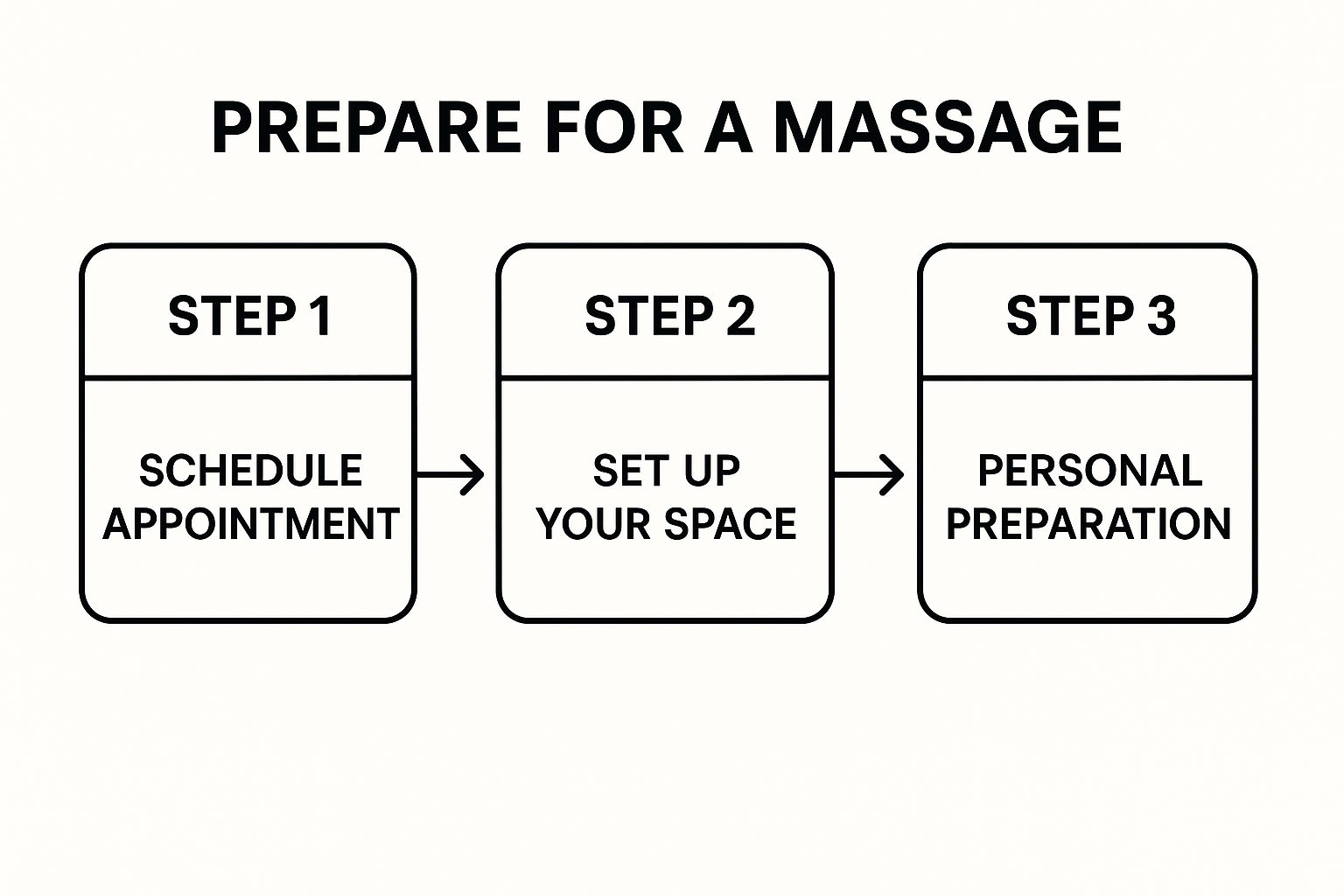
So, you’ve booked your massage. Fantastic! But to get the most out of every minute on the table, a little bit of prep work in the hours leading up to your appointment can make all the difference. Think of it less as a list of rules and more as a way to help your body and mind get ready to fully unwind.
It’s all about simple, common-sense steps: focusing on hydration, eating light, and having a clear idea of what you want to communicate to your therapist. These small actions ensure you arrive calm, comfortable, and poised to soak up all the benefits of your session.
Turning a Good Massage into a Great One
The best massage experiences start long before you step into the treatment room. The small things you do beforehand can genuinely elevate your session, transforming it from a simple treatment into a deeply restorative escape.
This isn’t about adding more stress to your day; it’s about removing any little hurdles to relaxation. When you’ve handled the practical details in advance, you free yourself up to focus purely on healing and release during your appointment.
Why a Little Prep Goes a Long Way
Proper preparation makes a world of difference for both you and your therapist. When you’re well-hydrated, your muscle tissue is much more pliable and responsive to treatment. If you’ve skipped a heavy meal, you won’t feel bloated or uncomfortable lying down. And when you’ve taken a moment to think about what your body needs, you can communicate those goals clearly.
The most important thing you can do before a massage is to shift into a receptive state. By taking care of the logistics beforehand, you allow your mind to let go and your body to accept the healing work.
The demand for high-quality massage is soaring, with the UK spa and massage market now valued at around £3.5 billion. Clients are becoming more savvy, realising that their own preparation plays a huge part in the outcome.
Here in the UK, any good therapist will tell you the same things: arrive 10-15 minutes early to settle in and fill out any forms without rushing. They’ll also stress the importance of drinking plenty of water before and after your session to help your body flush out the toxins released from your muscles. And the golden rule? Avoid a heavy meal for at least two hours beforehand. It’s a simple tip, but it makes a massive difference to your comfort. To learn more about the UK’s thriving wellness industry, you can explore the growing UK spa market and its trends.
Ultimately, knowing how to prepare for your massage empowers you. It turns what could be a passive appointment into an active partnership between you and your therapist, working together to achieve the best results for your physical and mental wellbeing.
Quick Preparation Checklist Before Your Massage
To make things even simpler, here’s a quick summary of the most important steps to take in the 24 hours before your appointment.
| Preparation Step | Why It Matters | Recommended Timing |
|---|---|---|
| Hydrate Well | Helps muscles become more pliable and aids post-massage detox. | Throughout the 24 hours before your session. |
| Eat Light | Prevents discomfort or bloating while lying on the table. | Have your last substantial meal 2 hours before. |
| Avoid Caffeine & Alcohol | These can dehydrate you and overstimulate the nervous system. | For at least 4-6 hours prior to your massage. |
| Take a Warm Shower | Helps to start the muscle relaxation process and cleanses the skin. | About 1 hour before your appointment. |
| Plan Your Arrival | Eliminates stress from rushing and gives you time to decompress. | Plan to arrive 10-15 minutes early. |
| Think About Your Goals | Helps you communicate clearly what you need from the session. | The day of your appointment. |
Following this simple checklist helps ensure you walk into the treatment room feeling calm, comfortable, and ready to receive the full benefits of your massage.
Setting the Stage the Day Before Your Session
The secret to a truly great massage doesn’t start when you walk through our doors. It actually begins the day before. By making a few simple, conscious choices in the 24 hours leading up to your appointment, you create the perfect foundation for your body and mind to fully embrace the experience.
Think of it as groundwork. When you arrive properly hydrated, nourished, and with a calm mind, you’re not just ready for your massage—you’re primed to receive every last drop of its therapeutic goodness.
Hydration Is Key for Your Muscles
There’s a very good reason why every therapist will tell you to drink water. Proper hydration is everything when it comes to muscle health. When your muscle tissue is well-hydrated, it’s more pliable and supple, which allows your therapist to work more deeply and effectively without causing unnecessary discomfort.
Picture your muscles as little sponges. Dry sponges are stiff and brittle, but when they’re hydrated, they become soft and resilient. Aim to drink plenty of water throughout the day before your session to get your muscle tissue in the best possible condition.
Proper hydration doesn’t just prepare your muscles for the massage; it also equips your body to efficiently flush out the metabolic waste that is released from your tissues during the treatment.
This simple step makes a huge difference in reducing any post-massage soreness, helping you feel energised and refreshed instead of sluggish.
Eat and Drink with Relaxation in Mind
What you put into your body in the hours before your massage can either help or hinder your ability to relax. It’s a good idea to steer clear of heavy, rich meals, as they can leave you feeling uncomfortably full or bloated on the table. A big meal also diverts your body’s energy toward digestion, pulling it away from the process of deep relaxation.
It’s also wise to limit or avoid a couple of specific drinks:
- Alcohol: This is a big one. Alcohol is dehydrating and can heighten your sensitivity, which might make the massage pressure feel more intense than it should.
- Too Much Caffeine: As a stimulant for your nervous system, caffeine works against the calm, relaxed state you’re trying to achieve. Your usual morning coffee is perfectly fine, but maybe skip that extra cup in the afternoon before your treatment.
Instead, opt for light, nourishing meals and snacks. A simple soup, a fresh salad, or some fruit are all fantastic choices that give you energy without weighing you down.
Start the De-stressing Process Early
Your mental state is just as crucial as your physical one. If you arrive with your mind racing at a hundred miles an hour, it’s going to be much harder to settle in and let go. The good news is you can start winding down the evening before. For a truly immersive experience, consider creating your own serene spa day at home to set the mood.
A warm bath with Epsom salts can do wonders for easing any initial muscle tension. Or, you could simply spend 10-15 minutes on some gentle breathing exercises or mindfulness meditation. This conscious act of slowing down sends a clear signal to your body that it’s time to shift gears from “doing” to just “being,” which makes your transition onto the massage table feel completely natural and seamless.
Your Game Plan on the Day of the Massage
The day of your massage is all about making a smooth, stress-free shift from your busy routine to the calm of the treatment room. A little bit of thought in the hours leading up to your appointment will make all the difference, ensuring you arrive feeling composed and ready to relax, not flustered and rushed.
Think of it as setting the stage for total relaxation. How you manage your time, what you wear, and even what you listen to on the way can have a real impact on how well you unwind. It’s your chance to start shedding the day’s stress before you even lie down on the table.
Arrive Early and Unhurried
One of the best things you can do for yourself is to manage your travel time well. I always tell my clients to aim to get to the spa at least 10-15 minutes before their scheduled time. This buffer isn’t just for filling out paperwork; it’s a crucial window for you to mentally decompress.
Rushing to an appointment is a guaranteed way to bring that tense, frazzled energy with you. Arriving early lets you:
- Use the restroom without feeling like you’re in a race against the clock.
- Sit quietly for a few moments, maybe with a glass of water.
- Begin to let go of your to-do list and the noise of the outside world.
This simple act sends a signal to your nervous system that it’s safe to start winding down. You move from a state of “doing” into one of “receiving,” which is exactly where you want to be for a truly beneficial massage.
Dress for Comfort and Ease
When it comes to what to wear on massage day, think comfort and convenience. Go for loose, soft clothing that’s easy to slip off and on again. Yoga trousers, a comfy t-shirt, or a cosy jumper are perfect choices.
Believe me, the last thing you want after a blissful session is to grapple with tight jeans or fiddly buttons. It can jolt you right out of that lovely, relaxed state. Wearing something simple helps you hold onto that tranquil feeling long after you’ve left the spa.
Your clothing choice is part of the preparation. It’s a physical cue to yourself that you are prioritising comfort and ease for the day.
Light Fuelling and a Mindful Commute
Try to have a light snack about an hour before your appointment. This will stop your stomach from rumbling or feeling a bit weak from low energy. A piece of fruit, a handful of nuts, or a small yoghurt are all great options. It’s enough to keep your body happy without making you feel full or uncomfortable on the table.
On your way here, pay attention to your surroundings. Instead of listening to the news or a high-energy podcast, why not put on some calming music? Or just enjoy the silence. This helps create a mental buffer, protecting the peaceful state you’re building. It’s an approach that’s becoming more popular, especially as wellness programmes encourage professionals to fit relaxation into their busy lives. You can find out more about how the UK massage industry is adapting to modern work life and making preparation even easier.
Communicating for a Truly Custom Massage
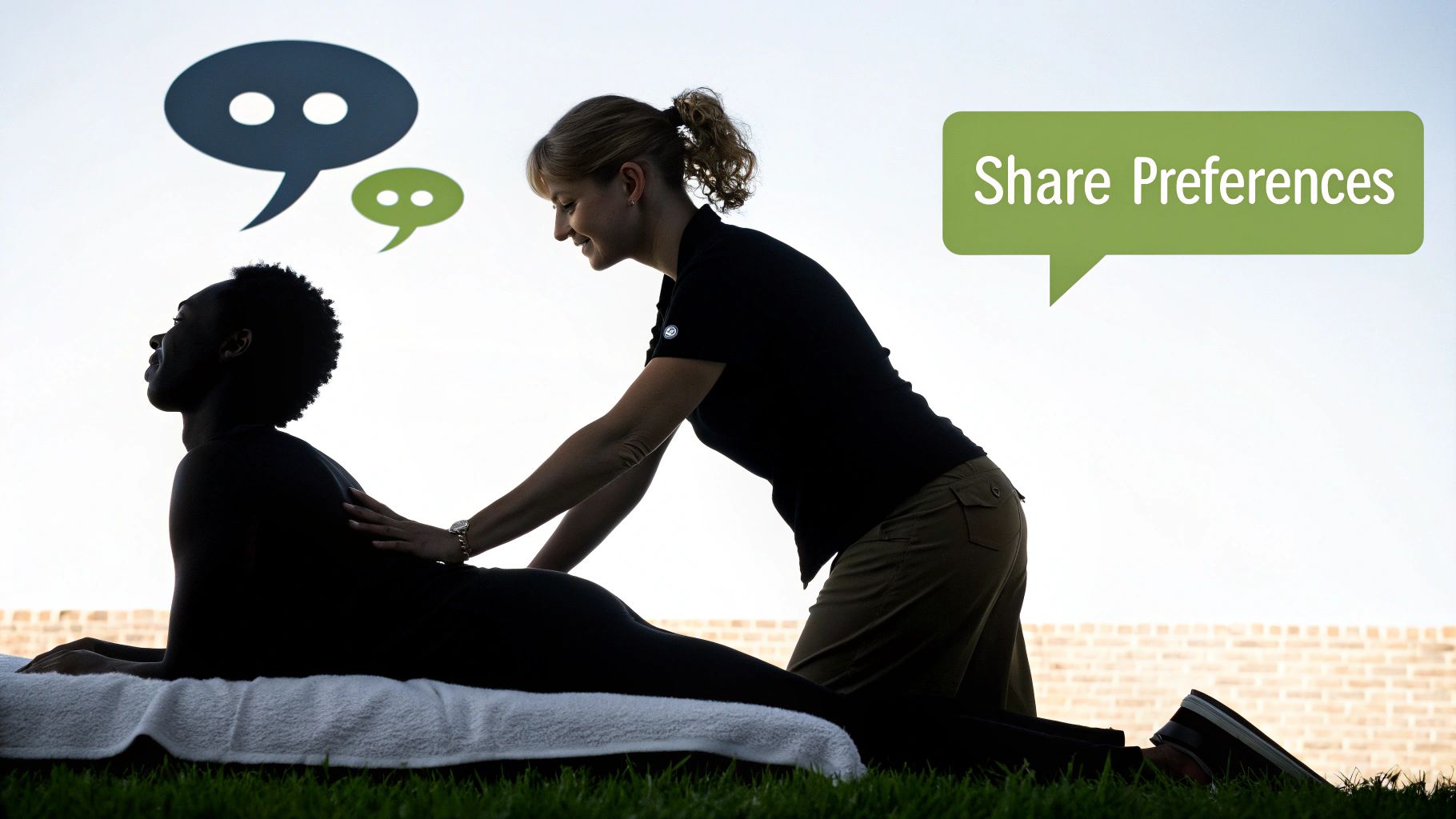
Your voice is probably the most important tool you have for getting a massage that really hits the spot. When you communicate openly, you turn a standard session into a proper therapeutic partnership with your therapist. It’s how you unlock a treatment that’s perfectly suited to your body and what you need on that particular day.
The conversation should start before any oil is even applied. Think of this initial chat as your chance to set the stage. Don’t be shy; this is the moment to share exactly what brought you through the door. A good therapist is a bit like a detective, and the clues you give them are vital.
The Pre-Session Conversation
Treat this first chat like a mini-consultation. Your therapist doesn’t just want to know where you feel sore, but also why. For instance, instead of just saying, “my shoulders are sore,” give them a bit more detail. “My right shoulder feels really tight and achy, especially after I’ve been at my desk all day. I think it’s from using the mouse so much.” That level of detail helps them zero in on the exact muscles that need attention.
It’s also crucial to be clear about your goals for the session. Are you hoping for:
- Deep relaxation to melt away the stress from a hectic week?
- Pain relief for a specific, nagging injury?
- Improved mobility to help with your golf swing or yoga practice?
- A sense of energy balancing to feel more centred and grounded?
Knowing your main objective helps the therapist pick the right techniques just for you. It’s the real difference between a lovely, general massage and a targeted, truly effective treatment.
Discussing Pressure and Comfort
Pressure is one of the most personal things in a massage, and it’s essential to talk about it before and during your session. There’s no right or wrong amount—it’s all about what feels good and effective for you. What feels like wonderfully deep work to one person might feel downright painful to another.
Never, ever hesitate to speak up about pressure. A simple, “That’s a bit too deep,” or, “You could go a little firmer there,” is all a therapist needs to hear. Your feedback isn’t a criticism; it’s essential guidance for them to help you.
Your therapist should check in with you during the massage, but don’t feel you have to wait to be asked. If anything makes you feel uncomfortable—whether it’s the pressure, the temperature of the room, or even the volume of the music—let them know straight away. Your comfort is always the top priority, and you are in complete control of your session.
Think of it as an ongoing dialogue. If they’re working on a particularly tender spot, you could say, “That’s the spot, but could we ease off just a little?” This allows them to work on the problem area effectively without causing you unnecessary pain. This open line of communication is what ensures you get the absolute most out of your treatment, leaving you feeling better, not battered.
To help you prepare, here’s a quick guide on what to share with your therapist.
Key Communication Points for Your Therapist
This table breaks down the essential information you should share with your massage therapist to ensure a safe, comfortable, and effective treatment tailored just for you.
| Topic | What to Share | Why It’s Important |
|---|---|---|
| Pain & Discomfort | The exact location, type of pain (e.g., sharp, dull, achy), and what makes it better or worse. | Helps the therapist target the right muscles and avoid causing further irritation. |
| Medical History | Any recent injuries, surgeries, chronic conditions (like arthritis or high blood pressure), or if you are pregnant. | Ensures your safety. Certain conditions require modifications to the massage technique. |
| Pressure Preference | Whether you prefer light, medium, or deep pressure. Be specific—”firm but not painful.” | This is completely personal. The right pressure is key to both relaxation and therapeutic results. |
| Session Goals | What you hope to achieve: relaxation, pain relief, improved flexibility, etc. | Guides the therapist in choosing the most appropriate techniques for your desired outcome. |
| Areas to Focus On | Specific areas that need extra attention (e.g., “my lower back and hamstrings”). | Makes the session more efficient and ensures your biggest concerns are addressed. |
| Areas to Avoid | Any areas that are ticklish, injured, or you simply don’t want to be massaged. | Guarantees your comfort and helps you relax fully during the treatment. |
| Allergies | Any known allergies to oils, lotions, or scents. | Prevents allergic reactions and ensures the products used are safe for your skin. |
Ultimately, a fantastic massage experience is built on a foundation of trust and clear, confident communication. Don’t be afraid to use your voice—it’s the secret to getting the results you came for.
How to Extend the Benefits After Your Massage
The bliss doesn’t have to end the moment you step off the massage table. In fact, what you do in the hours after your treatment is just as important as the preparation. It’s your chance to really lock in all that good work, helping your body settle into the benefits for much longer-lasting relief.
Think of this post-massage window as a crucial time for healing. A few simple actions can make a world of difference, extending that wonderful feeling of lightness and ensuring you get the absolute most from your investment in yourself.
Continue to Hydrate Generously
If there’s one piece of advice I give every single client, it’s this: keep drinking water. During a massage, your therapist is working to release all that stored tension and those stubborn knots. This process also helps to liberate metabolic waste that has been locked away deep in your muscle tissues.
Proper hydration is the key to helping your lymphatic system effectively flush these by-products out of your body. If you don’t drink enough water, you might end up with a mild headache or feel a bit sluggish as these toxins hang around. Aim to sip plenty of water for the rest of the day to support this natural cleansing process.
Embrace Gentle Activity and Rest
After a massage, your body is in a state of deep relaxation and repair. Now is definitely not the time to jump into a high-intensity workout or rush off to a stressful meeting. Strenuous exercise can put a real strain on muscles that have just been coaxed into a state of release, which can lead to soreness or even undo the benefits.
Instead, choose gentle, restorative activities that honour the calm state your body is in.
- A Warm Epsom Salt Bath: This is a classic for a reason. Soaking in a warm bath with Epsom salts is fantastic for soothing muscles further, easing any potential next-day tenderness, and prolonging that deep sense of relaxation.
- Light Stretching: Think slow, mindful movements. Gentle stretches can help you maintain the lovely new flexibility in your muscles. The goal isn’t to push your limits, but simply to move with awareness.
- Quiet Rest: Honestly, sometimes the best thing you can do is absolutely nothing. Give yourself permission to simply sit, lie down, or even take a nap. This gives your body and mind the space they need to fully integrate the therapeutic work.
Post-massage care is all about creating a gentle transition back into your routine. By avoiding sudden shocks to your system, you allow the benefits of the massage to settle in more deeply and last longer.
To really enhance that feeling of recovery, you might also want to explore the benefits of wood-fired hot tubs for overall wellness. This kind of gentle heat can be a perfect partner to your massage, extending the sense of calm and physical ease for days. The most important thing is simply to listen to your body and give it the peaceful environment it’s asking for.
Of course. Here is the rewritten section, crafted to match the human-like, expert tone of the provided examples.
Your Massage Questions, Answered
Even with the best intentions, a few last-minute questions can pop up, causing those little pre-massage jitters. It’s completely normal to feel a bit uncertain, especially if you’re new to massage or visiting a different spa for the first time. We want to clear up a few of the most common concerns so you can walk into your session feeling confident and ready to relax.
After all, the goal is for you to feel safe, comfortable, and completely at ease. Getting these little worries out of the way beforehand means you can switch off your busy mind and truly sink into the experience once you’re on the massage table.
How Much Do I Really Need to Undress?
This is easily the most frequent question we hear, and the answer is wonderfully simple: undress to your own comfort level. There’s no strict rule. Your therapist is a trained professional who will keep you modestly covered with a sheet or towel throughout the entire session using expert draping techniques.
Only the specific area they are working on at that moment—like your back, a leg, or an arm—will be uncovered. Many of our clients choose to leave their underwear on, which is perfectly fine. The most important thing is that you feel comfortable enough to let go and relax. You are always in control.
Is It Okay to Talk During My Massage?
That’s entirely up to you. This time is yours to spend however you find most relaxing. Some people find that a bit of quiet conversation helps them unwind at the beginning of a session, while others prefer complete silence to truly drift away. Honestly, many clients fall asleep, which every therapist takes as the highest compliment!
Your therapist will likely check in with you about the pressure or your comfort, but they will take their cues from you. Don’t feel you need to fill the silence; your quiet focus tells them you’re relaxing and they’re doing a great job.
“This is your time. Whether you want to chat, stay silent, or drift off to sleep, do whatever helps you relax the most. We are here to facilitate your peace and comfort.”
What If I’m Really Ticklish?
Don’t worry, being ticklish is a very common and natural reaction! If your therapist starts working on an area and you feel that familiar squirmy sensation, just let them know. It’s not a problem in the slightest.
An experienced therapist can easily adjust their approach. Often, simply applying a firmer, broader pressure or using a slower, more deliberate hand speed can bypass that tickle response entirely. This allows them to work on the muscles effectively without making you uncomfortable. Just speak up—we want to know!
What if I Have a Cold? Should I Still Come In?
If you’re feeling unwell, especially with a fever, a persistent cough, or anything that might be contagious, it’s always best to reschedule your appointment. Getting a massage can sometimes intensify your symptoms because it boosts your circulation.
More importantly, it’s about protecting the health of your therapist and the other clients visiting the spa. Just give our reception a call as soon as you can to explain the situation. They will genuinely appreciate your thoughtfulness and will be happy to help you find another time for your treatment when you’re feeling much better.
CONTACT US
Contact Natural Light Wellness Spa to book your holistic treatments today. Our friendly Guildford team is ready to help you find your perfect session. Contact us now to schedule your relaxation and prioritise your wellness.


