


If you’re feeling overwhelmed lately, know that you’re not alone. Before we dive into solutions, let’s start with something much gentler: simply acknowledging the stress you’re feeling, without any judgement at all. This is about creating small pockets of calm in your day, being kind to your boundaries, and really listening to what your body and mind are trying to tell you.
Recognizing the Weight of Workplace Stress
Hello there, I'm Katie. If you’ve found your way to this article, I imagine you’ve been feeling the heavy weight of work lately. Before we go any further, I want you to just take a soft breath and know that whatever you're feeling is completely valid. You are far from alone in this.
This is our gentle starting place, where we can explore what workplace stress truly is—not as a sign of weakness, but as a deeply human response to the pressures of modern life. It’s a feeling so many of us share. In fact, a recent study revealed that a staggering 79% of British workers experience work-related stress on a regular basis. This isn't just a feeling; it has real effects, contributing to an estimated 17.1 million working days lost in just one year. You can read more about these workplace stress statistics and their impact.
Together, we can softly unpack the common threads that weave this feeling of overwhelm. Perhaps it’s the relentless pressure of deadlines, that feeling of being unheard in meetings, or the quiet weight of an overflowing inbox that seems to follow you home.
"Sometimes the kindest thing you can do is pause and breathe."
My real hope here is to create a safe, warm space for you to acknowledge these feelings. This isn't about pushing through or finding a quick fix. It’s about learning to listen to yourself with deep kindness and compassion.
A Gentle Awareness Practice
Simply recognising the signs in your own body and mind is the first step toward finding a sense of ease.
It can feel overwhelming to know where to begin, so I've put together a few simple invitations to help you connect with yourself. These aren't tasks to be completed, but gentle ways to check in.
Practice | A Gentle Invitation |
|---|---|
A Two-Minute Body Scan | “Where am I holding tension right now? Let me just notice, without needing to change a thing.” |
A Simple Journal Prompt | “Today, my stress feels like… [let the words flow without judgement].” |
A Mindful Sip | “For this one cup, I will simply notice the warmth, the aroma, and the taste.” |
These small acts of awareness are not about adding another "to-do" to your list. Instead, they are quiet, powerful moments of turning towards yourself with care.
Learning how to reduce workplace stress truly begins here, with this very first step of gentle awareness. It’s where our journey to finding more balance and peace really begins.
Creating Pockets of Calm in a Busy Day
When your day feels relentless and the pressure is mounting, the idea of finding even a single moment for yourself can seem utterly impossible. We’ve been there too — those moments where everything feels like too much. But creating pockets of calm isn't about adding another task to your already overflowing list. It’s about gently weaving moments of stillness into the fabric of your existing routine.

The goal isn't to escape your work entirely. It's about finding your centre right in the middle of it. These tiny pauses have helped so many of us feel more anchored during chaotic days, allowing us to move through our tasks with a bit more ease and a lot less tension.
Your Breath as an Anchor
One of the most powerful yet beautifully simple ways to find stillness is through your breath. Your breath is always with you, a quiet anchor in any storm.
You might try this simple practice right where you are, right now:
Soften your gaze: Gently lower your eyes or close them completely if that feels comfortable.
Notice your breath: Without changing a thing, just feel the air as it enters and leaves your body.
A gentle count: You could try breathing in for a count of four and out for a count of six. That slightly longer exhale is wonderful for soothing your nervous system.
Even just three of these breaths between emails or meetings can make a world of difference. If you'd like to explore this further, then try our breathwork sessions designed to give you techniques to take away with you
https://natural-light-surrey.com/class/breatherapy/
Mindful Moments in Your Daily Routine
Creating calm doesn't require a special room or a huge chunk of time. It’s about bringing a gentle awareness to the small things you already do throughout the day.
Think about that warm cup of tea you hold in your hands. Instead of sipping it while typing, could you take just one minute to notice its warmth, its scent, the taste of that very first sip? This is a moment of calm.
"Take this as your reminder: you are allowed to rest."
Another beautiful way to create space for yourself is with a brief walk. Just five minutes away from your desk to feel the air on your skin or notice the leaves on a nearby tree can help you reset and return with a clearer mind.
Even simple self-care rituals, like a quick hand massage at your desk, can provide profound comfort. For men who might feel unsure where to start, understanding your guide to a calming treatment that can offer gentle inspiration for deep relaxation. These practices remind us that care is for everyone.
Remember, these are gentle invitations, not demands. You might try taking a few minutes today just for yourself.
Nourishing Your Boundaries with Kindness
Does the idea of setting boundaries feel a bit harsh or confrontational to you? If so, I invite you to look at it from a different perspective.
Think of your boundaries not as walls you’re building to keep people out, but as an act of profound kindness to yourself. They're gentle lines drawn in the sand, there to protect your energy and well-being.

Here, we’ll explore how you can communicate your needs with softness and clarity. It’s about learning how to give your best without giving all of yourself away. We’ve all been there—those moments where everything feels like too much, and taking on one more thing feels unbearable. In those moments, honouring your limits is a beautiful act of self-care.
Saying 'No' with Softness
Learning to say 'no' when you're already at capacity is one of the most restorative gifts you can give yourself. It doesn't have to be a blunt rejection; it can be a gentle, honest expression of where you’re at.
You could try phrases that feel supportive rather than standoffish:
"Thank you so much for thinking of me for this. My plate is quite full at the moment, but I'd love to help in the future when I have more space."
"I'm not able to give that the attention it deserves right now. Could we perhaps revisit this next week?"
"I need to protect my energy today, so I'll have to pass this time."
Notice how these statements honour both the person asking and your own needs. They create space without creating conflict, which is at the very heart of learning how to reduce workplace stress.
"A boundary is not a wall. It is a loving message to yourself and others about what you need to feel safe and supported."
Protecting Your Time and Energy
Your time outside of work is sacred. It's your space to rest, restore, and connect with the things that bring you joy. Protecting it is absolutely essential for creating a work-life relationship that feels balanced and healthy.
This can be as simple as switching off email notifications on your phone after a certain hour or making a pact not to discuss work over dinner. Establishing these clear boundaries is a cornerstone of stress reduction.
In the same way, learning to calm your mind is a beautiful practice that supports this process. It gives you the inner stillness you need to recognise when your boundaries are being crossed, allowing you to respond with gentle intention rather than a reaction born from stress. Each time you honour your need for rest, you're nourishing yourself from the inside out.
Soothing the Physical Signs of Stress
Our bodies have a way of telling us things long before our minds are ready to listen. That nagging tension across your shoulders, a dull headache that won't shift, or a sense of fatigue that feels bone-deep—these aren't just minor annoyances. Think of them as messengers.
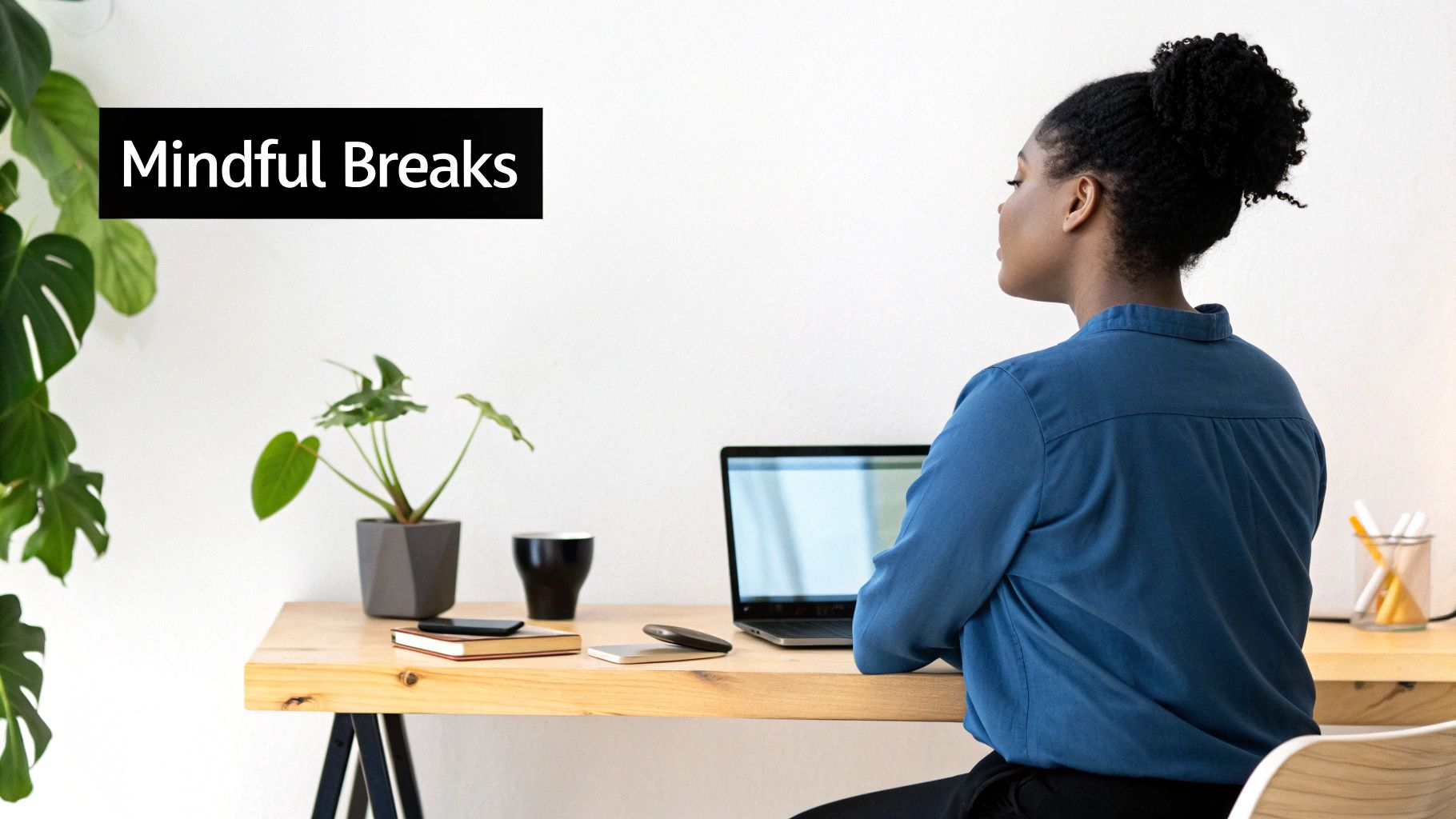
Here, we'll gently tune into these physical symptoms and explore how to respond with genuine care. The goal isn't to create more worry but to simply notice and offer yourself some compassion. It's an opportunity to take small, restorative actions that can beautifully soothe your nervous system.
The mind-body connection is incredibly powerful, especially when it comes to the pressures of work. Here in the UK, we're becoming much more aware of how chronic stress manifests both physically and psychologically. It often shows up as headaches, muscle pain, and sheer exhaustion, and can spiral if left unchecked. A recent report found that a staggering 74% of UK adults have felt overwhelmingly stressed in the past year. It’s a clear sign we need to listen to what our bodies are telling us. You can explore more of these insights on stress from the Priory Group.
Gentle Movements for Your Body
You don’t need a yoga mat or a special outfit to give your body a moment of relief. These simple movements can be done right at your desk, whenever you feel that tension creeping in.
Soften your shoulders: Gently raise your shoulders up towards your ears, take a soft breath in, and as you exhale, let them completely release and drop down. Feel the difference.
Ease your neck: Slowly tilt your head to one side, imagining your ear is being drawn towards your shoulder. Breathe into the stretch you feel along the side of your neck, then gently come back to the centre and repeat on the other side.
Open your heart: Sit up tall and gently clasp your hands behind your back. If it feels comfortable, lift your arms slightly until you feel a lovely, gentle opening across your chest.
This isn't about pushing for a perfect stretch. It’s simply about bringing mindful movement and a little kindness back into your body during a busy day.
"Your body is your home. Tending to its quiet signals is one of the most profound acts of self-care you can offer yourself."
Creating a Soothing Workspace
Your immediate environment can have a huge impact on your sense of well-being. Why not create a small sanctuary at your desk with a few items that bring you comfort and calm?
It could be as simple as keeping a soft blanket or pashmina to drape over your shoulders when the office air-con gets a bit much. A small bottle of calming essential oil, like lavender, can be dabbed onto your wrists for a moment of sensory peace.
Even the simple act of a gentle hand massage can feel incredibly restorative. Just taking a few minutes to rub your palms and fingers can release so much stored tension. It's these small, intentional acts of care that remind us we are worthy of comfort, even in the middle of a demanding workday.
Finding Your Allies for Support
If you take just one thing away from this, please let it be this: you do not have to carry this weight all by yourself. I know how much it can feel that way, but reaching out is an act of incredible strength, not weakness. Think of this as a gentle guide to finding the allies who can help you shoulder the load when it feels too heavy.
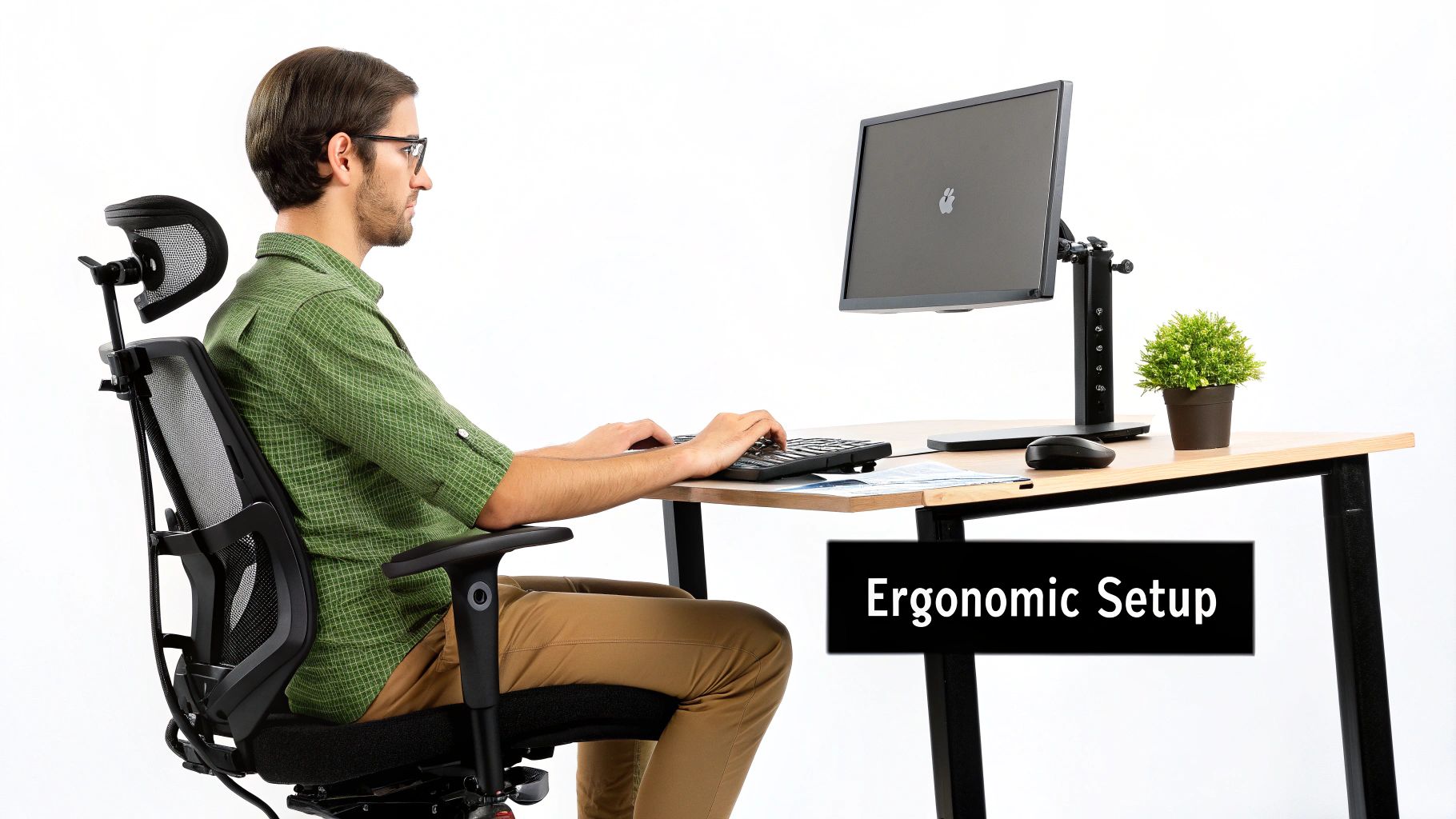
We've all been there—those moments where everything just feels like too much. It’s a feeling that’s become all too common across the UK. In fact, The Burnout Report from Mental Health UK revealed just how widespread this is, with 91% of adults reporting high or extreme stress levels in the last year. These feelings are particularly sharp for younger workers, highlighting just how crucial it is to build supportive connections. You can find more details on these findings from The Burnout Report.
Opening a Gentle Conversation at Work
The very idea of talking to a manager or a colleague about stress can feel overwhelming. But it doesn't have to be a big, formal meeting. It can be a simple, honest chat.
You could find a quiet moment and say something soft and open, like:
"I've been feeling quite overwhelmed lately and was hoping I could talk it through with you."
"I'm finding my workload a bit difficult to manage right now and would really appreciate your thoughts."
This isn’t about complaining; it’s about inviting support. It's about weaving a supportive ecosystem around you, one gentle conversation at a time.
Looking Beyond the Workplace
Your support network extends far beyond the office walls. There is immeasurable comfort in connecting with a close friend who truly listens or a therapist who can offer a safe, confidential space. I promise you, people do want to help.
"Allowing someone to support you is a gift to both yourself and to them. It creates a beautiful circle of connection and care."
Many UK workplaces also offer formal support systems you can access without any pressure. It’s worth looking for resources like:
Employee Assistance Programmes (EAPs): These often provide free, confidential counselling and a whole host of support services.
Mental Health First Aiders: These are colleagues trained to listen non-judgementally and guide you toward the help you need.
Remember, exploring these options is a quiet act of self-love. For those feeling the need for deeper energetic and emotional support, you might also want to explore how to unlock your inner peace with Reiki, a wonderfully gentle therapy for restoring balance. Seeking support is simply about finding what feels right for you on your journey back to yourself.
It’s completely natural to have questions as you find your way towards a calmer work life. If you feel a little uncertain, please know that this is just part of the process.
I’ve gathered some of the most common queries I hear and offered some gentle answers from my heart. I truly hope these words bring a little more clarity and reassurance as you continue on your beautiful journey. Remember, every small step you take is a meaningful act of self-care.
What If These Gentle Practices Feel Difficult at First?
If you try a breathing exercise or a moment of stillness and find your mind racing, please don't be discouraged. This is so, so normal.
After running on high alert for what feels like forever, it takes time for our nervous systems to learn how to soften and slow down again.
Think of it like tending a garden. The soil might be hard and difficult at first, but with gentle, consistent care, it will begin to yield. Just showing up for yourself, even for a single breath, is a beautiful act. There’s no right or wrong way to do this; there is only your way.
"Sometimes the kindest thing you can do is simply to pause and breathe. This is your gentle reminder that you are allowed to rest, even just for a moment."
How Can I Keep Work Stress from Affecting My Home Life?
Creating a soft transition between your workday and your personal time is a deeply nourishing practice. This isn't about building a solid wall, but about creating a gentle ritual that signals to your mind and body that it's time to release the day.
It could be as simple as changing out of your work clothes into something soft and comfortable the moment you get home. You might also try taking a short, quiet walk around your neighbourhood, mindfully leaving the day's worries behind with each step.
Here are a few gentle invitations you could explore:
Sensory Shift: Light a candle with a calming scent like lavender to completely change the atmosphere.
Sound Bath: Instead of switching on the television, play some soft, peaceful music to welcome you home.
Tech-Free Time: Designate the first thirty minutes at home as a screen-free period to simply reconnect with yourself and your space.
These small, intentional acts help you to gently close the door on work. This allows you to be more present and truly at ease in your sanctuary, protecting the peace you cultivate at home. Reach out if we can help in any way [email protected]


